What Skills Will Students Need for Their Future?
posted on Oct 19, 2026
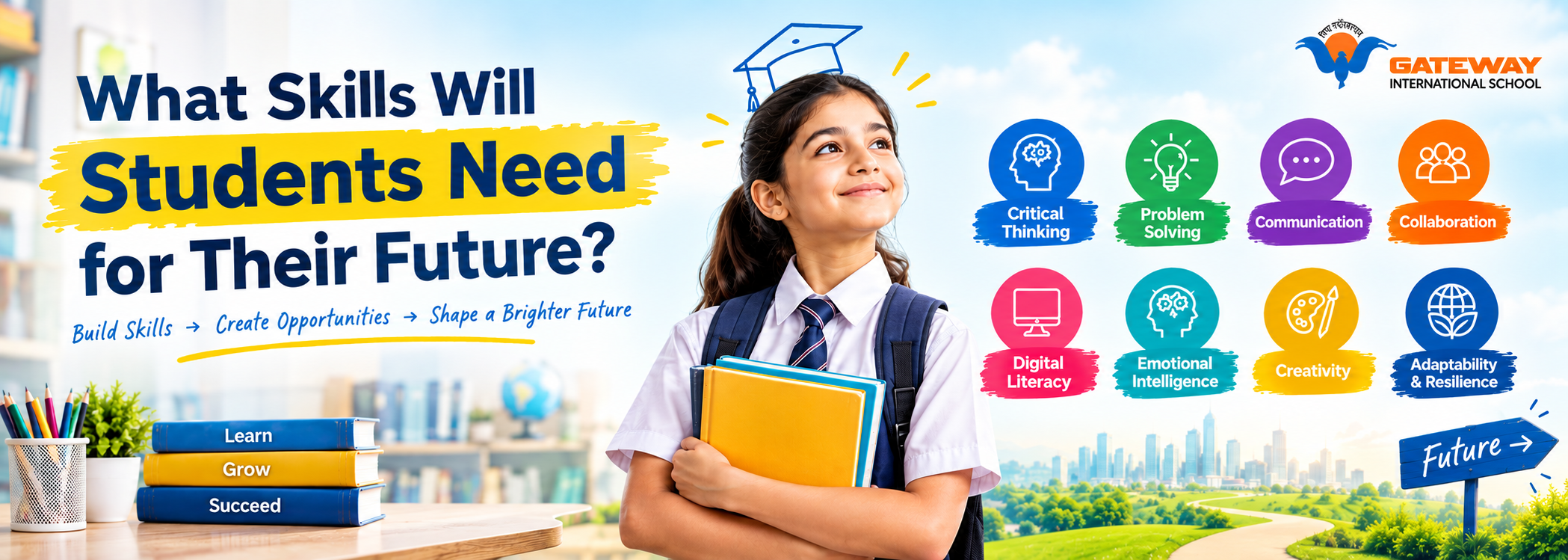
The world is changing rapidly, and the skills students need to succeed are evolving with it. Advances in technology, artificial intelligence, global communication, and changing career opportunities are transforming how people learn and work. In this environment, academic knowledge remains important, but students also need practical abilities that help them adapt, think independently, and solve real-world problems.
Understanding the essential Skills for Student development is becoming increasingly important for parents and educators who want to prepare children for future challenges. From critical thinking and communication to digital literacy and emotional intelligence, these skills help students become confident learners and responsible individuals.
For parents exploring quality education in Sonipat, choosing a school that encourages academic excellence alongside practical skill development can be an important step towards preparing children for a changing future.
1. Critical Thinking and Problem-Solving
Critical thinking is one of the most valuable skills students can develop. It enables them to analyse information, question assumptions, evaluate evidence, and make informed decisions rather than simply memorising facts.
Problem-solving complements critical thinking by helping students identify challenges and explore practical solutions. These abilities are useful across subjects, from solving mathematical problems to understanding scientific concepts and managing everyday situations.
Schools can encourage these skills through classroom discussions, experiments, puzzles, research assignments, and project-based activities.
When students are encouraged to ask questions and explain their reasoning, they become more independent thinkers who are better prepared to handle unfamiliar challenges.
2. Communication Skills
Effective communication is essential in education, professional life, and personal relationships. Students need to express their ideas clearly, listen carefully, ask meaningful questions, and communicate respectfully with others.
Strong communication skills also support teamwork, leadership, presentations, and collaborative learning.
Students can strengthen these abilities through debates, storytelling, group discussions, presentations, reading, and writing exercises. Opportunities to participate in school activities can also help them become more confident when speaking in front of others.
Developing communication skills early helps children express themselves effectively and understand different perspectives.
3. Digital Literacy and Technology Skills
Technology is becoming an integral part of education and everyday life. Students need to understand how to use digital tools effectively, evaluate online information, protect their personal data, and behave responsibly in digital spaces.
Digital literacy goes beyond operating a computer or smartphone. It includes recognising misinformation, understanding online privacy, using productivity tools, and learning how digital technologies influence society.
As artificial intelligence becomes more accessible, students should also learn how to use AI tools thoughtfully, verify generated information, respect intellectual property, and understand the limitations of automated systems.
Schools can support digital learning through age-appropriate technology activities, computer education, digital research, and responsible online practices.
4. Creativity and Innovation
Creativity allows students to generate ideas, explore different possibilities, and approach challenges from new perspectives. Innovation involves applying those ideas to develop useful solutions.
These abilities are relevant across many fields, including science, design, entrepreneurship, technology, and the arts.
Students can develop creativity through art, music, creative writing, science experiments, model-making, coding, and open-ended assignments.
Rather than focusing only on finding one correct answer, educators can encourage students to experiment, learn from mistakes, and explain their ideas.
A learning environment that values curiosity helps students become more confident in exploring new possibilities.
5. Emotional Intelligence and Self-Awareness
Future readiness is not only about academic and technical abilities. Students also need to understand their emotions, manage stress, recognise the feelings of others, and develop healthy relationships.
Emotional intelligence helps children respond constructively to challenges, handle disagreements, and work effectively with different people.
Self-awareness allows students to identify their strengths, recognise areas for improvement, and develop realistic goals.
Schools can encourage these abilities through collaborative activities, reflection exercises, counselling support, classroom discussions, and positive teacher-student relationships.
When children learn to manage their emotions and respect others, they are better equipped to navigate both academic pressures and everyday life.
6. Teamwork and Collaboration
Many future careers require people to work together, share responsibilities, and combine different areas of expertise. Teamwork teaches students how to contribute ideas, respect diverse opinions, resolve disagreements, and work towards shared goals.
Group projects, team sports, classroom activities, science exhibitions, and school events provide opportunities to practise collaboration.
Students also learn that successful teamwork involves accountability. Each individual must complete assigned tasks while supporting the progress of the group.
These experiences can help children develop interpersonal skills that are useful in higher education, professional environments, and community life.
7. Adaptability and Lifelong Learning
The future workplace will continue to evolve as industries adopt new technologies and respond to changing needs. Students therefore need to develop the ability to learn continuously and adapt to unfamiliar situations.
Adaptability helps children respond positively when plans change, while a lifelong learning mindset encourages them to acquire new knowledge throughout their lives.
Students can develop these qualities by exploring new subjects, participating in unfamiliar activities, reflecting on mistakes, and learning to approach challenges with patience.
Teachers and parents can reinforce the idea that abilities improve through effort, practice, feedback, and persistence.
When students become comfortable with learning something new, they are better prepared for future educational and career transitions.
8. Financial Literacy and Decision-Making
Financial literacy helps students understand how money works and how everyday financial decisions influence their future.
Age-appropriate financial education can introduce concepts such as budgeting, saving, spending wisely, comparing prices, and distinguishing between needs and wants.
Older students can gradually explore banking, interest, digital payments, financial risks, and responsible borrowing.
Practical activities, such as planning a budget for a school project or managing a small savings goal, can make these concepts easier to understand.
Developing financial awareness early can help students make more informed decisions as they become independent adults.
9. Leadership and Responsibility
Leadership is not limited to holding a formal position. It also involves taking initiative, accepting responsibility, supporting others, and making thoughtful decisions.
Students can practise leadership by organising group projects, participating in student councils, helping classmates, managing school activities, and contributing to community initiatives.
These experiences teach children how to set goals, coordinate tasks, listen to others, and remain accountable for their actions.
Responsible leadership also requires empathy and integrity. Students should understand that effective leaders consider the needs of others rather than focusing only on personal achievements.
10. Research Skills and Information Evaluation
Students today have access to enormous amounts of information, but not all of it is reliable or accurate. The ability to find, evaluate, and interpret information is therefore increasingly important.
Research skills include identifying relevant questions, locating trustworthy sources, comparing evidence, organising findings, and presenting conclusions clearly.
Students should learn to distinguish between credible information, misleading claims, advertising, and unsupported opinions.
These skills are especially useful for science projects, academic assignments, independent learning, and future professional work.
Teachers can encourage students to use multiple sources, explain their conclusions, and acknowledge the sources they consult.
How Schools Can Help Students Develop Future-Ready Skills
Schools play a significant role in helping children apply their knowledge beyond textbooks. A supportive learning environment should provide opportunities for students to explore ideas, collaborate with classmates, develop confidence, and practise practical skills.
Parents evaluating schools should look for educational experiences that include:
- Activity-based learning: Opportunities to understand concepts through experiments, demonstrations, and practical tasks.
- Communication and presentation: Activities that encourage students to express ideas clearly and confidently.
- Sports and extracurricular programmes: Opportunities to build teamwork, discipline, resilience, and creativity.
- Technology education: Responsible and age-appropriate use of digital tools.
- Project-based learning: Experiences that help students investigate questions and develop solutions.
- Personal guidance: Support that recognises individual strengths, learning needs, and areas for improvement.
- Values and responsibility: Activities that encourage empathy, respect, integrity, and responsible decision-making.
The most effective approach combines a strong academic foundation with opportunities to apply knowledge, explore interests, and develop independence.
Exploring Future-Ready Education at Gateway International School Sonipat
Parents searching for a school in Sonipat may consider how different educational environments support both academic achievement and personal development.
Gateway International School Sonipat is an option parents can explore when researching educational opportunities for their children. Before making a decision, families should review the school's current curriculum, teaching approach, facilities, extracurricular activities, and student support systems.
Parents can also ask how students are encouraged to develop critical thinking, communication, collaboration, creativity, and responsible technology use.
A school visit can help families understand the classroom environment, interact with educators, and determine whether the school's approach aligns with their child's interests and learning needs.
Rather than focusing exclusively on examination results, parents should consider how a school supports students in becoming confident learners who can adapt to new challenges.
How Parents Can Help Children Develop Essential Skills at Home
Skill development does not happen only in classrooms. Everyday family activities can provide valuable opportunities for children to practise and strengthen important abilities.
Parents can encourage future-ready learning by:
- Promoting reading: Encourage children to read different types of books and discuss what they learn.
- Encouraging curiosity: Welcome questions and help children explore answers using reliable sources.
- Assigning age-appropriate responsibilities: Allow children to organise their belongings, plan activities, and complete simple tasks independently.
- Supporting creative interests: Provide opportunities for drawing, music, building, writing, sports, or other activities they enjoy.
- Teaching practical decision-making: Involve children in simple budgeting, planning, and comparing options.
- Building healthy digital habits: Discuss online safety, privacy, screen-time balance, and responsible technology use.
- Valuing effort and progress: Help children learn from mistakes instead of focusing only on perfect results.
Consistent encouragement from parents and teachers can help students develop confidence and a willingness to learn throughout their lives.
Conclusion: Preparing Students for a Changing Future
The future will bring new opportunities as well as challenges, making it important for students to develop a balanced combination of academic knowledge, practical abilities, and personal qualities.
Critical thinking, communication, digital literacy, creativity, emotional intelligence, teamwork, adaptability, financial awareness, leadership, and research skills can help children navigate a rapidly changing world.
Developing these Skills for Student success requires consistent practice, supportive educators, meaningful learning experiences, and encouragement at home.
For families exploring educational opportunities in Sonipat, researching Gateway International School Sonipat alongside other schools can be a useful step towards finding an environment that supports both academic growth and overall development.
Ultimately, preparing children for the future means helping them become curious, capable, responsible, and confident individuals who are ready to keep learning throughout their lives.
Looking for the right educational environment for your child? Explore school programmes, meet educators, and compare learning opportunities to understand which approach best supports your child's future goals.